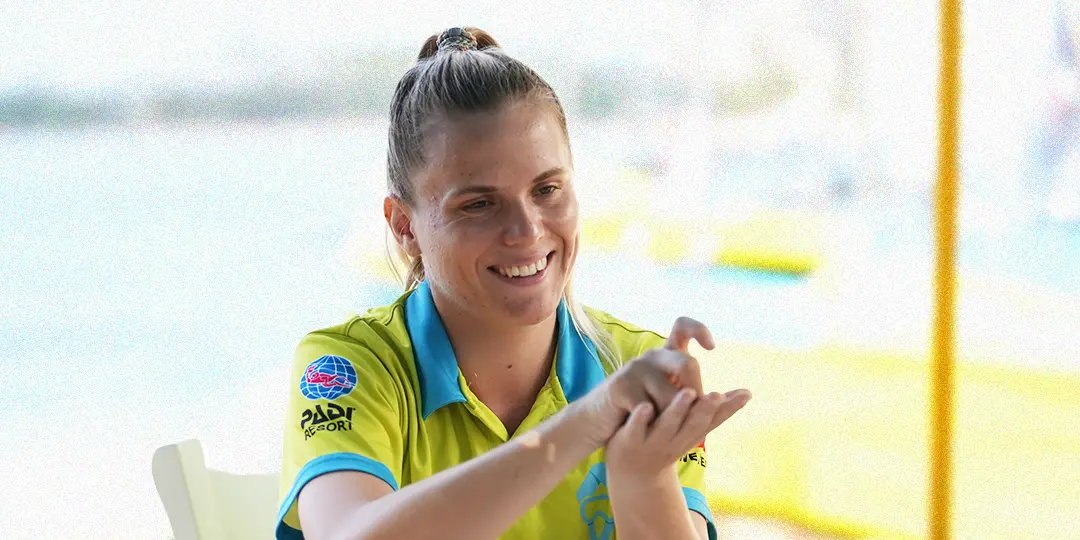

When you descend beneath the waves for your first dive, whether you’re exploring the vibrant coral reefs during PADI diving in Unawatuna or venturing into deeper waters elsewhere, you will quickly realise that your voice does not carry underwater. The ocean strips away our most natural form of communication, and suddenly, you’re in a world where gestures become your vocabulary and clarity can mean the difference between a memorable dive and a dangerous situation.
The silent language of diving is not just a collection of random hand movements that divers memorised during training. It’s a carefully developed system that has evolved over decades, refined by experience and occasionally by tragedy. Every signal serves a purpose, and understanding this underwater vocabulary transforms you from a nervous beginner into a confident diver who can navigate the complexities of the underwater world.
Why Communication Matters Below the Surface
The moment you submerge, you enter an environment that does not forgive miscommunication. You can’t simply shout to your buddy that you’re low on air or you have spotted something interesting. The regulator in your mouth and the properties of water make verbal communication impossible for recreational divers. This creates a unique situation where non-verbal signals become your lifeline.
Consider what happens when something goes wrong underwater. Your tank pressure drops faster than expected, or you feel that first twinge of discomfort that could signal the onset of decompression sickness.You need to communicate immediately and clearly. The best diving in Unawatuna or anywhere else depends heavily on divers who can express themselves effectively without words. The skill becomes second nature with practice, but it starts with understanding the fundamental signals that every diver must know.
The Universal Language of Hand Signals
Diving signals follow international standards, which means a diver from Japan can communicate with a diver from Brazil or Sri Lanka without any shared spoken language. This universality makes the diving community a truly global one. The basic signals form the foundation of all underwater communication.
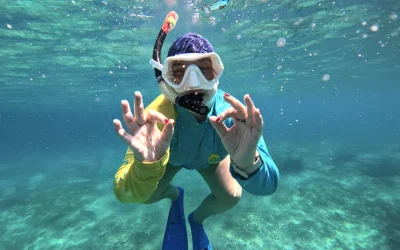
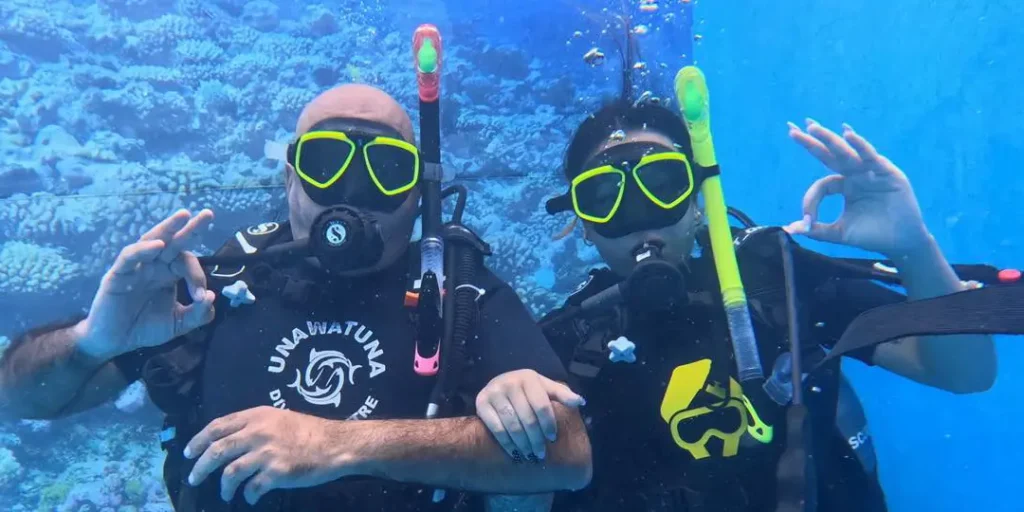
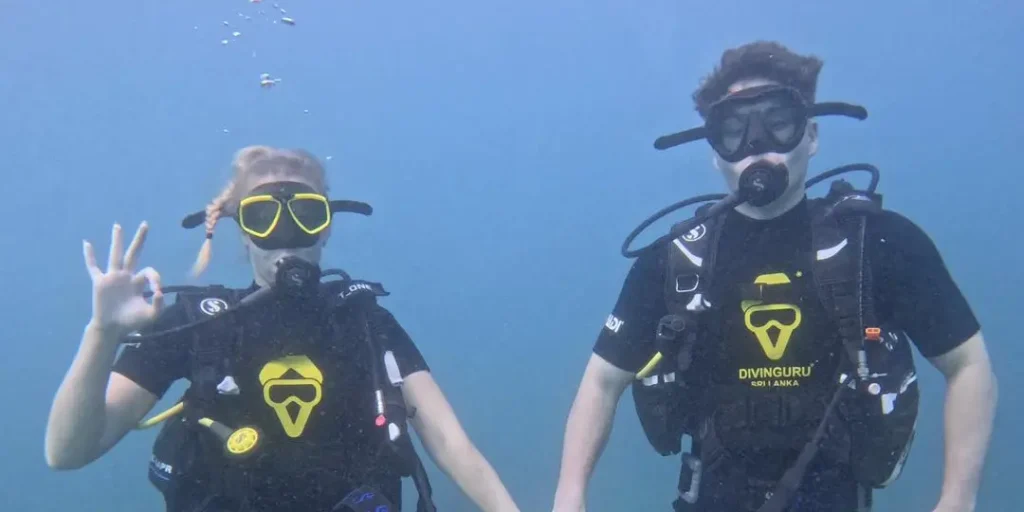
The “OK” signal remains the most important and frequently used gesture in diving. Formed by connecting your thumb and index finger in a circle while extending the other three fingers, this signal asks and answers the question that matters most: are you alright? What makes the signal particularly effective is its versatility. You use it to check on your buddy, to confirm you have understood an instruction, and to signal that everything is proceeding normally. However, the OK signal requires a response. When your dive buddy flashes you an OK, you must return it. Silence underwater can mean anything, and assumptions lead to problems. Equally crucial is the “not OK” or “problem” signal. Executed by extending your hand flat and tilting it side to side, this gesture immediately alerts others that something is wrong. It doesn’t specify the exact problem, but it opens the door for further communication. After signalling a problem, you will typically indicate what is wrong using
additional signals or by pointing to the affected area. The “ascend” and “descend” signals use the thumb to indicate direction. Thumbs up means you want to go up and end the dive, while thumbs down means you want to go deeper. New divers sometimes forget that thumbs up does not mean “OK” underwater like it does on land. Making that mistake once during your first few dives teaches you quickly to stick to proper signals.
Running low on air requires its own specific signal. You make a fist and move it horizontally across your throat, clearly indicating that your air supply is becoming a concern. This signal doesn’t necessarily mean you are out of air completely, but it tells your buddy that it’s time to start heading toward the surface or the exit point. In the context of diving in Unawatuna, where many popular dive sites feature relatively shallow reefs, air consumption varies significantly between experienced divers and beginners, making this signal particularly important for mixed-ability groups.
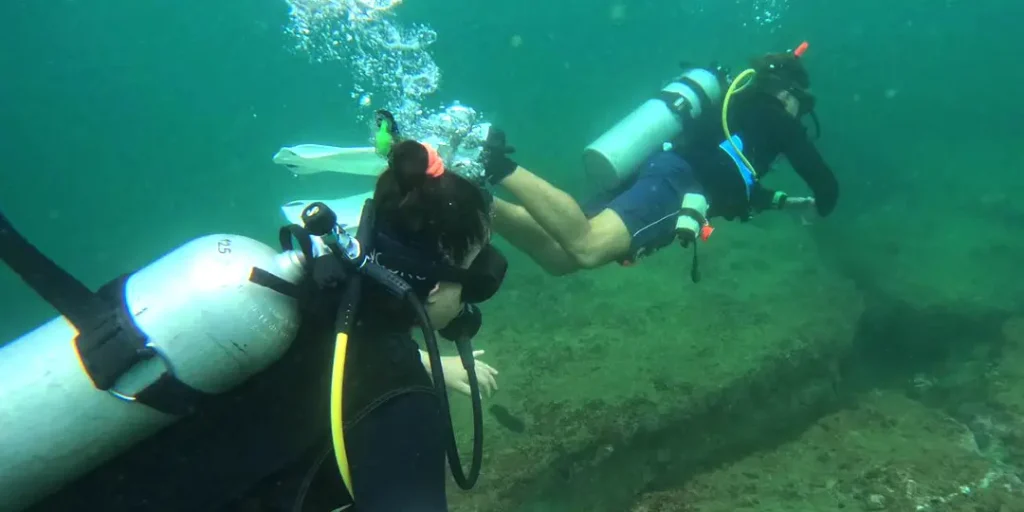
Equipment-Related Communication
Your diving equipment functions as your life support system underwater, and several signals specifically address equipment issues. When your mask floods or you’re having trouble with your regulator, you need to communicate that quickly. Pointing to your mask while making a concerned expression indicates mask problems, while pointing to your mouth indicates regulation issues.
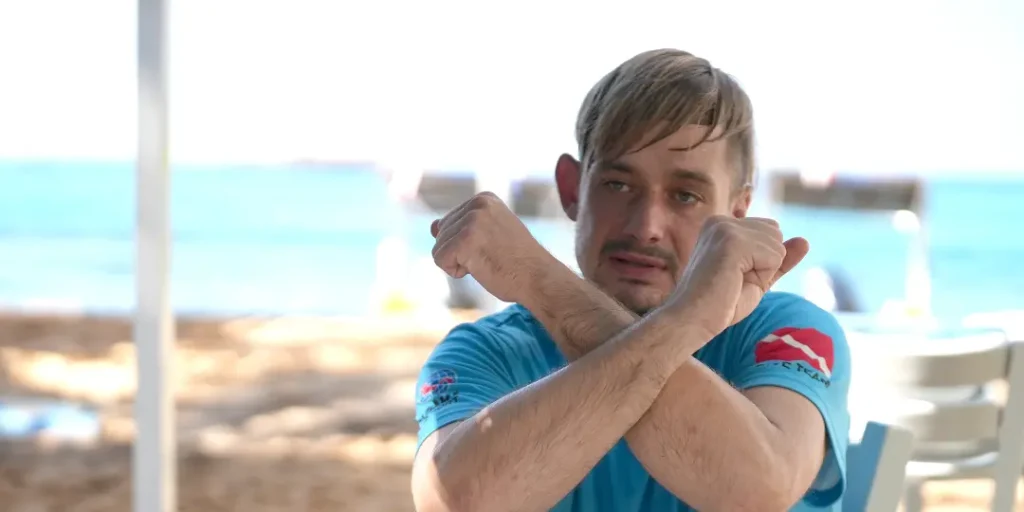
The “share air” signal becomes critical in emergency situations. You form a “T” with your hands or bring a flat hand horizontally across your throat and then point to your buddy. This tells your dive partner that you need to use their alternate air source, an emergency procedure that every diver practices during training but hopes never to use in real situations.
Directional & Environmental Signals
Beyond personal status and equipment, divers need to communicate about direction and what they’re seeing. Pointing in a specific direction while making eye contact with your buddy indicates where you want to go or what you want them to look at. When you spot something remarkable, an extended index finger pointing at the subject draws attention to it. Many PADI diving centres in Unawatuna, like Divinguru, teach students to be specific with pointing, using their whole hand rather than just a finger to indicate larger features like rock formations or schools of fish.
The “stay here” or “hold position” signal uses a flat palm facing down, moving up and down slowly. This tells your buddy to maintain their current position while you investigate something or adjust equipment. Similarly, the “come here” signal beckons with your fingers, pulling them towards your palm repeatedly. For depth references, divers tap their depth gauges and then display numbers using their fingers. This becomes especially relevant when planning multilevel dives or ensuring everyone stays within safe depth limits. South coast diving in Sri Lanka often includes walls and slopes where depth can change quickly, making depth communication essential.
The Nuances of Underwater Body Language
While hand signals form the core of diving communication, experienced divers develop an intuitive sense of reading body language underwater. The way someone breathes, their fin kicks, and their overall posture tell stories. Rapid, shallow breathing indicated by quick exhaust bubbles suggests stress or exertion. Erratic swimming patterns might indicate disorientation or nitrogen narcosis at depth. A diver who suddenly stops moving and looks around has likely become confused about direction.
This subtle communication doesn’t replace formal signals, but it complements them. When you dive regularly with the same buddy, you start recognising their patterns and can often anticipate issues before they signal them. This partnership develops over time and multiple dives together.
Light Signals & Night Diving
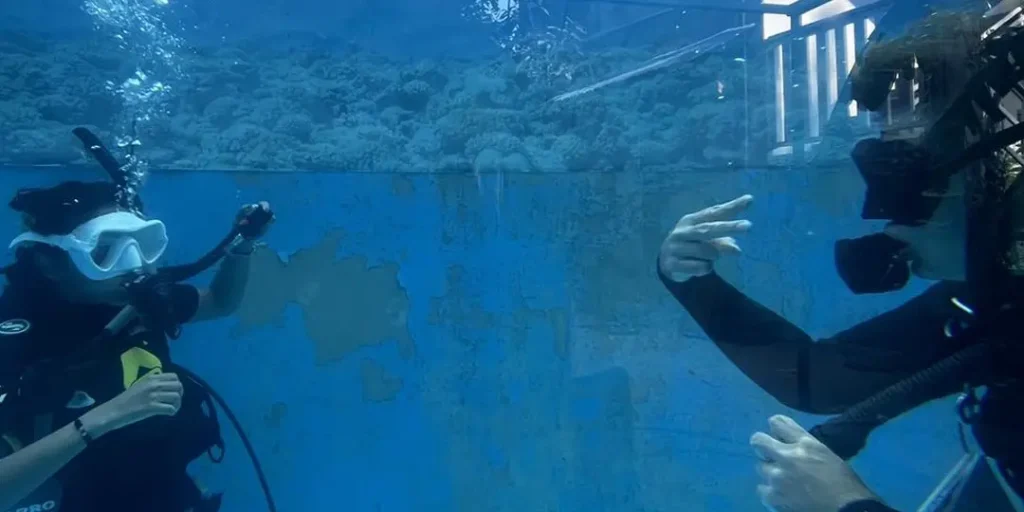
When the sun sets and darkness envelopes the underwater world, hand signals become invisible. Night diving introduces a completely different communication system based on light. Divers carry torches that become their voices in the darkness. Moving your light in a circle means OK, while moving it rapidly side to side indicates a problem. Shining your light on yourself rather than directly at your buddy’s eyes helps them see your hand signals without being blinded.
The Unawatuna diving scene includes some memorable night dives where bioluminescent plankton creates natural light shows. During these dives, managing your torch correctly and using light signals effectively becomes even more critical because the magical display can be distracting.
Training & Practice
Learning diving signals during your initial certification represents just the beginning. The difference between knowing a signal and being able to execute it smoothly while managing your buoyancy, checking your gauges, and watching for marine life requires practice. Many divers find that their signal communication improves dramatically between their first ten dives and their fiftieth.
When considering Unawatuna diving prices, remember that thorough training in communication often distinguishes quality dive operators from those cutting corners. Instructors who emphasise clear communication and regularly practice signals with students provide better value than those who rush through the basics. The investment in proper training pays dividends in safer, more enjoyable dives.
Cultural Adaptations & Local Variations
While diving signals follow international standards, some local variations exist, particularly for marine life identification. In regions with specific endemic species, divers develop shortcuts to identify them. Local dive guides might have special signals for whale sharks, manta rays, or particular types of sharks. Before diving in a new location, brief with your guide about any local signals they use. This preparation applies whether you’re exploring familiar waters or trying new dive sites.
The Silent Bond
Underwater communication transcends mere signal exchange. It builds trust and partnership between divers. When you can communicate effectively with your buddy, you both relax and enjoy the dive more fully. That understanding creates confidence. You know that if something goes wrong, you can tell your buddy clearly and quickly. You trust they will understand and respond appropriately.
This bond develops through shared experience and clear communication. Every successful dive where you and your buddy maintain contact, share discoveries, and surface safely, strengthens that connection. The underwater world demands self-reliance, but it equally demands the ability to work as part of a team. Your signals become the threads that weave that teamwork together.
Mastering diving signals opens up the underwater world in ways that go far beyond safety, though safety remains paramount. When you can communicate effortlessly, you notice more, stress less, and immerse yourself more fully in the experience. The fish swimming past, the coral formations, the play of light through the water – all of these become more accessible when you’re not struggling to remember how to signal “let’s go up” or “look at that”.
Whether you’re planning your first dive or your hundredth, whether the destination is the warm waters of the Indian Ocean or the kelp forests of California, the language of diving signals remains constant. It’s a language worth learning well, practicing regularly, and never taking for granted. In the silent world beneath the waves, these gestures become your voice, your safety net, and your connection to the diving community worldwide.