

For anyone who has ever peered over the side of a boat into clear tropical water and wondered what lies beneath, a guided diving tour is the place to start. It is one of the most accessible ways to enter the underwater world – whether you are a complete newcomer nervous about the basics or an experienced diver exploring new territory. Few places on earth make that entry as seamless and rewarding as Unawatuna diving, a corner of southern Sri Lanka where warm Indian ocean currents, colourful reef systems, and a thriving dive community have combined to create one of the most welcoming dive destinations in Asia.
However, before you kit up and roll backwards out of the boat, it helps to know what a guided tour actually involves – what happens before you hit the water, what to expect once you’re beneath it, and how to get the most from the experience. A well-run guided dive is far more than just a trip to see fish. It is a carefully orchestrated experience designed to keep you safe, comfortable, and genuinely astonished.
The Briefing: Where Every Dive Begins
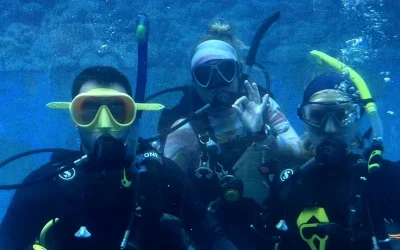
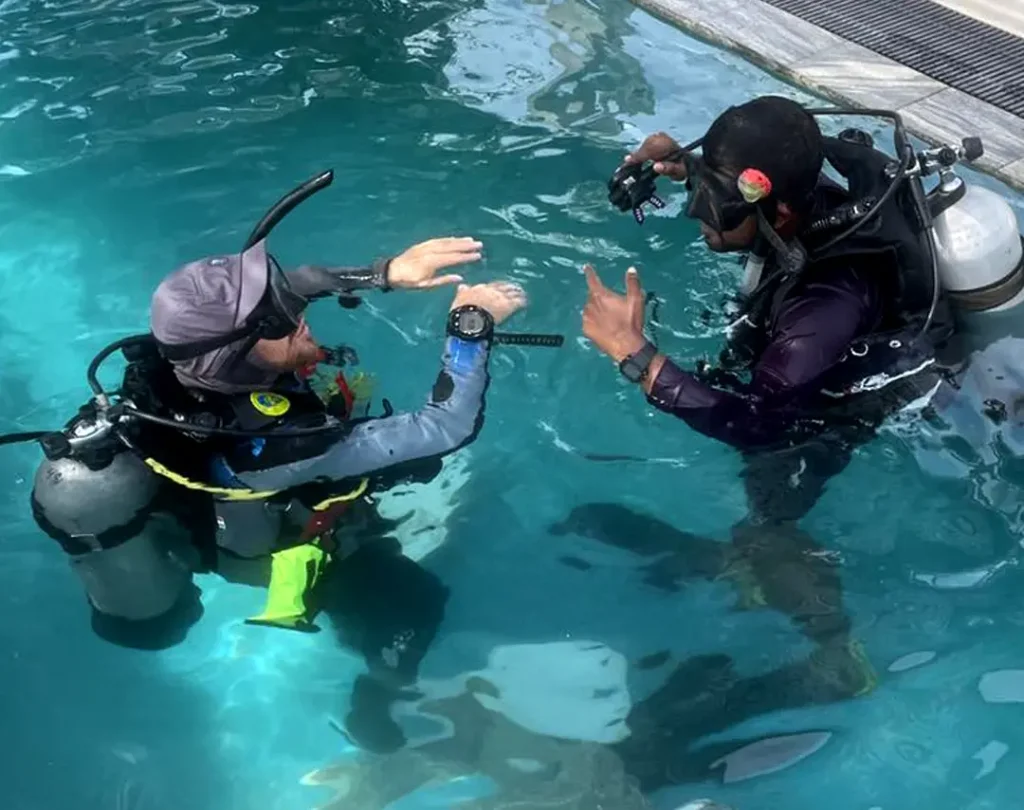
Every guided dive starts on dry land, usually in the form of a pre-dive briefing that deserves your full attention. This is where your dive guide – or divemaster, as they are formally known – walks you through the site you’re about to explore. You will learn about the depth and duration of the dive, the topography of the reef or wreck below, the marine life you are likely to encounter, and any currents or conditions to be aware of that day. A good divemaster will also run through hand signals, discuss what to do if you get separated from the group, and answer any questions you may have. This part of the dive might feel like a formality if you have done it many times before, but it is worth paying attention every single time. Conditions change, sites vary, and a local guide will always know something about the location that no manual can teach you.For first-timers or newly certified divers, this is also the moment to say something if you are nervous or unsure. Experienced guides have heard every question and concern imaginable, and a good one will take a little extra time to make sure you feel settled before you gear up
Gearing Up & Entering the Water
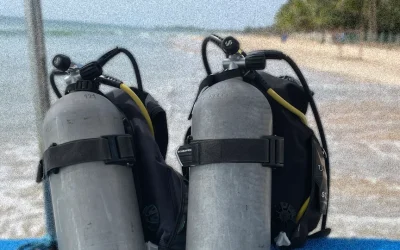
Once the briefing is done, you will be helped to assemble and check your equipment – mask, fins, wetsuit, BCD (Buoyancy Control Device), regulator, and tank. On a quality guided tour, the gear will be in good condition and well maintained, and the guide or a dive technician will run through a buddy check with you before anyone enters the water. This simple but important routine confirms that every component is working correctly and that both you and your dive buddy are ready to go.
Entry methods vary depending on the site and the vessel. Shore dives involve walking into the water from a beach, while boat dives typically use a giant stride entry from a platform or a backward roll from the side. Your guide will demonstrate the technique and stay close for your first entry if you are less experienced. Once in the water, you will carry out a quick buoyancy check at the surface before descending together as a group.
Underwater: The Guided Experience in Practice
This is where things get genuinely wonderful! Once you are below the surface and have sorted your buoyancy, a guided dive takes on a rhythm of its own. Your divemaster leads the group at a measured pace, pausing to point out marine life, navigating the reef with an ease that only comes from diving the same site dozens – sometimes hundreds – of times.
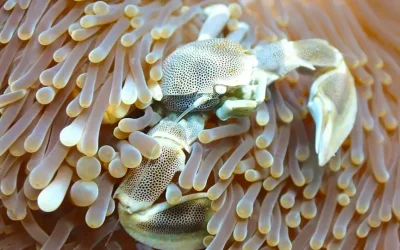
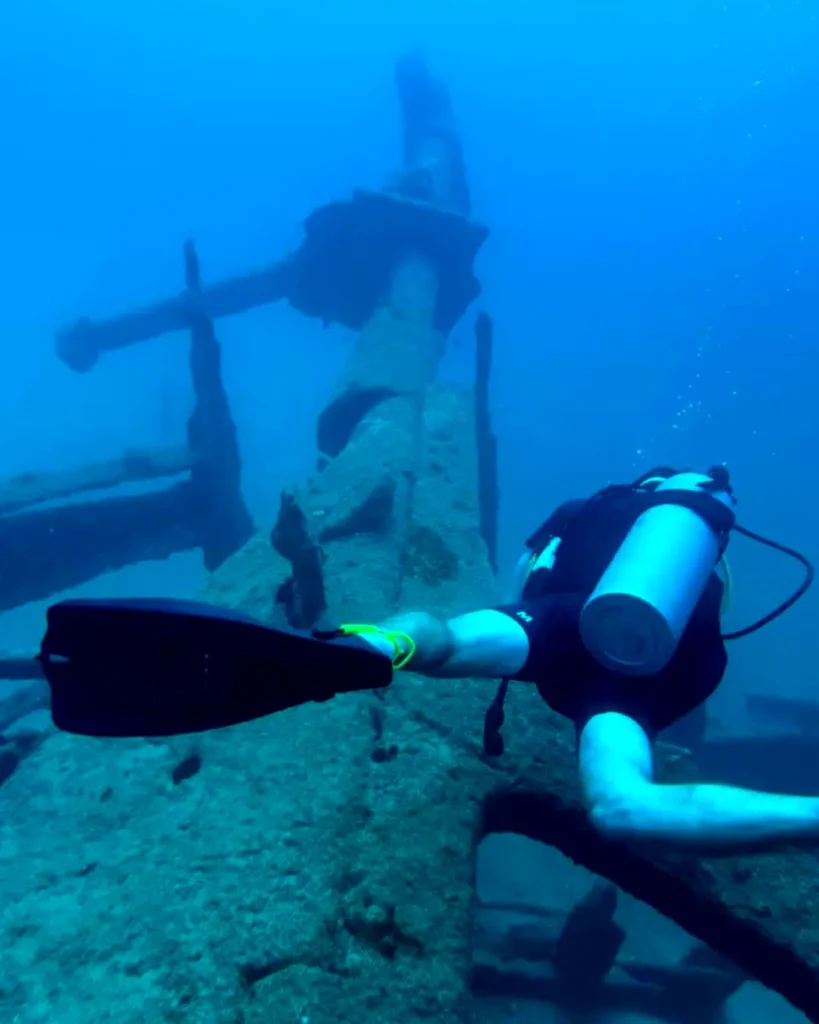
Being guided underwater means you can focus on the experience rather than navigation or depth management. Your guide monitors the group’s air, keeps track of time and depth, and will signal when it is time to start the ascent. If you encounter something unusual – a well-camouflaged octopus, a resting sea turtle, or a school of barracuda hanging motionless in the current – your guide will make sure you see it too. The best diving in Unawatuna tends to happen between November and April, when visibility is excellent and the seas are calm enough to access the full range of local sites. During these months, guided groups regularly encounter moray eels, colourful nudibranchs, and dense schools of tropical fish across the shallow reef systems that ring the bay. Deeper dives access wreck sites – most probably the Rangoon wreck – that have become artificial reefs in their own right, encrusted with soft corals and home to a remarkable diversity of fish. Diver’s Tip: Never touch the reef, even when stabilising yourself. A single grab can damage coral that took decades to grow, and many reef creatures – including seemingly harmless looking ones – can sting or bite.
What Kind of Diver Does a Guided Tour Suit?
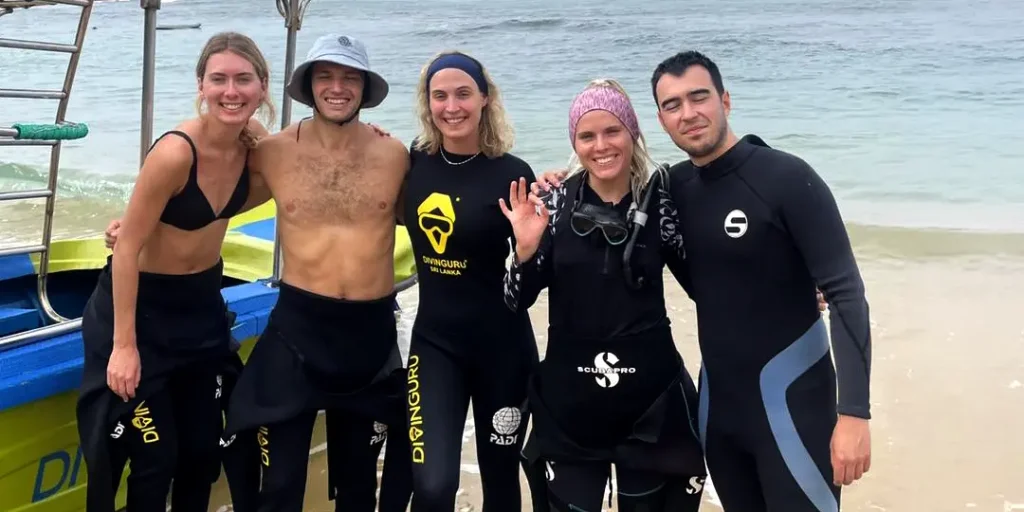
The short answer is almost any kind. Guided tours are not just for beginners. Even seasoned divers with hundreds of logged dives choose guided tours when diving in unfamiliar waters, and for good reason. A local guide offers something that experience alone cannot provide; intimate knowledge of the site, its conditions, and its residents.
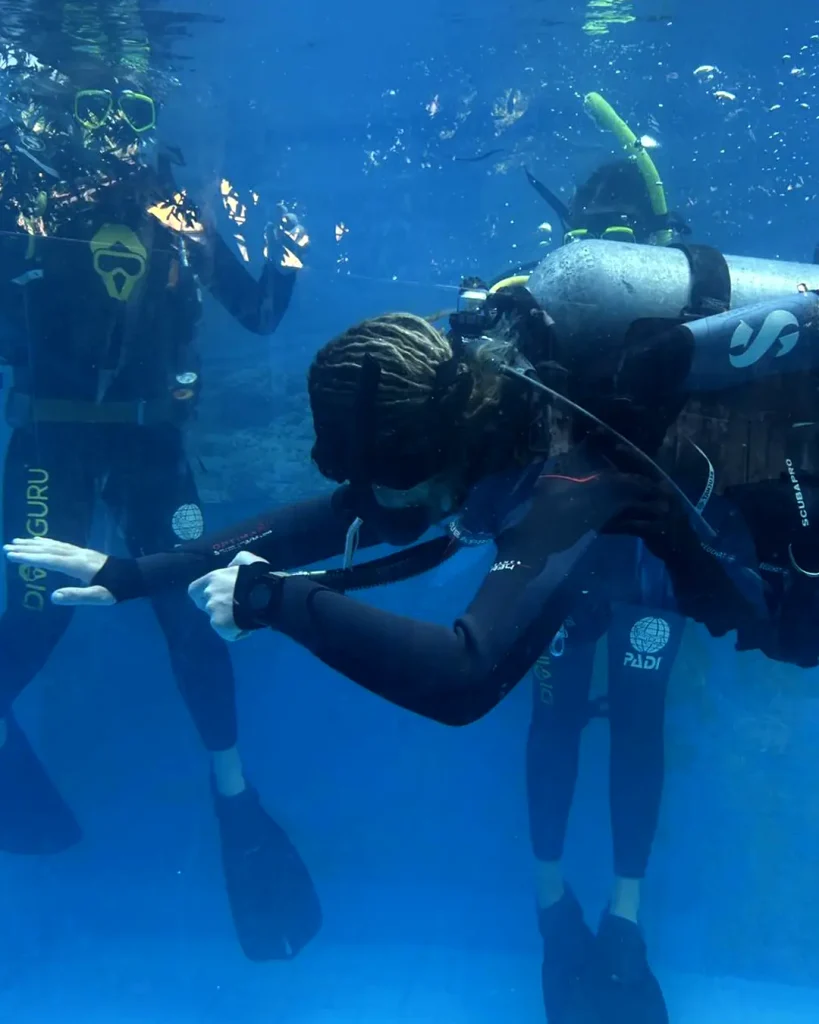
For beginners, PADI diving in Unawatuna offers a structured and internationally recognised pathway into the sport. The PADI Open Water Diver certification, typically completed over three to four days, combines classroom learning, confined water practice in a pool or shallow bay, and open water dives to certify you as an independent diver. Many people complete their PADI certifications and immediately sign up for their first guided fun dive – because once you are
comfortable in the water, you want to stay there. Discover Scuba Diving programmes are another option for complete newcomers who want to try diving before committing to a full certification. These short, instructor-led experiences take you to a controlled depth under direct supervision, giving you a genuine taste of the underwater world with minimal prior knowledge required.
Choosing the Right Dive Centre
Not all dive operations are created equal, and choosing a reputable centre makes a significant difference to your experience. When researching PADI diving centres in Unawatuna, look for operators who are affiliated with a recognised training agency, who are transparent about their equipment maintenance practices, and whose guides hold current certifications. Reading recent reviews helps, but nothing beats a conversation with the staff – a good dive centre like Divinguru will be happy to answer your questions about safety protocols, instructor experience, and the sites they operate. Group sizes matter more than many people realise. Smaller groups mean more attention from the guide, a less chaotic experience underwater, and a lower environmental impact on the reef. Ask about this before you book. Reputable operators set limits for a reason, and if a centre is advertising very large group dives at low prices, that is often a sign that something else has been compromise
On the subject of cost, Unawatuna diving prices are generally very reasonable compared to dive destinations in Southeast Asia and the Caribbean. A guided fun dive for certified divers typically falls between 35 and 45 Euros depending on the site and what is included, while a full PADI open water course tends to run between 350 and 450 Euros. These prices usually include equipment rental, guided instruction, and boat transport to the dive site. Discover Scuba experiences sit at the lower end of the scale, making them an accessible option for curious travellers who want a taste of
the underwater world without a larger financial commitment.
The Broader Canvas: South Coast Diving in Sri Lanka
Unawatuna sits within a stretch of coastline that punches well above its weight when it comes to underwater diversity. South coast diving in Sri Lanka encompasses everything from rocky reefs and pinnacles to wrecks for all levels of diver
Nearby sites around Weligama and Mirissa add further variety – Mirissa in particular is renowned for its encounters with whale sharks during the right season, making it a bucket list addition to any dive itinerary in the region.
The south coast has developed rapidly as a dive destination over the past decade, with a growing number of professional operators raising the standard for guided experiences across the board. For visitors who want to combine diving with broader travel – the old Dutch fort town of Galle is just ten minutes away, and the wildlife of Yala National Park is within easy reach – the area offers a density of experiences that is hard to match elsewhere in Sri Lanka.
After the Dive
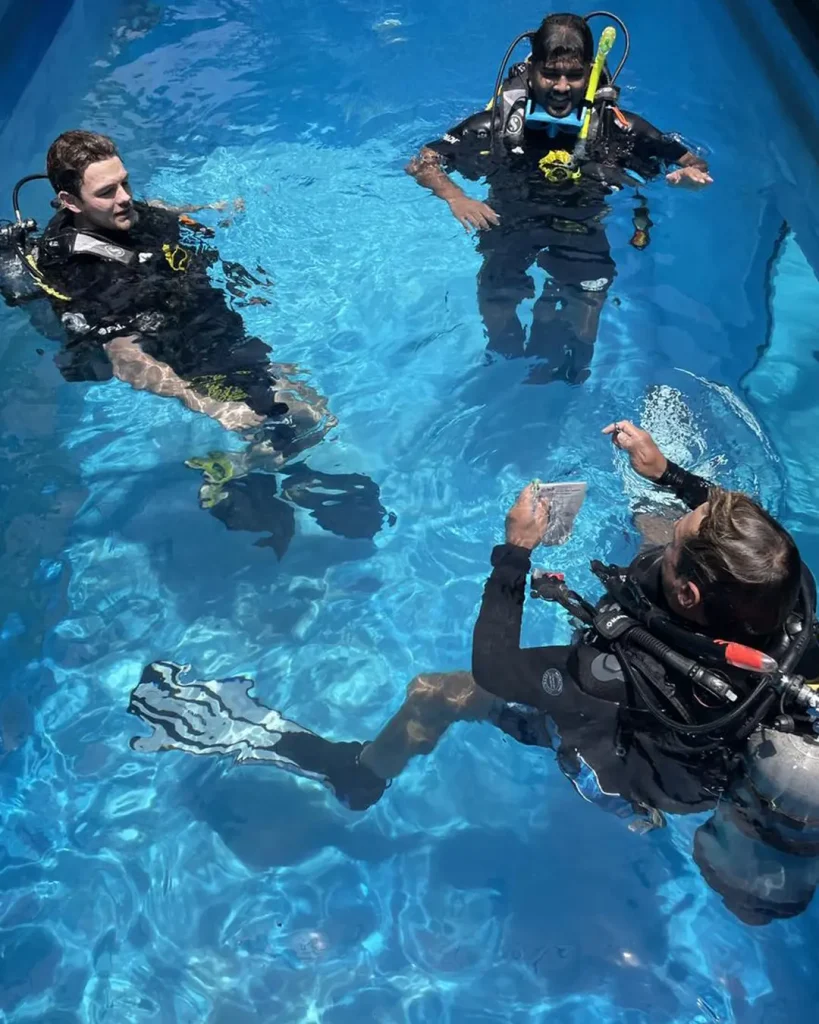
A good guided tour does not end when you surface. The best dive centres build in time for a proper debrief after each dive – a chance to review what you saw, ask questions, and discuss the conditions. This is also when you will log your dive, noting the site, depth, duration, visibility, water temperature, and notable sightings. For newer divers especially, the debrief is a valuable learning moment, and guides who invest time in it are usually the ones who care most about their divers’ long-term development of the sport. If you are exploring diving in Unawatuna for the first time, allow yourself more than one dive. The reef looks different in the morning light than it does at noon. The Rangoon wreck is a different experience from the coral gardens. Night dives reveal creatures you will never see during the day. One dive plants the seed; the ones that follow turn it into something that tends to stay with you long after you have dried off and packed your bag
The underwater asks very little of you in return for what it offers. A guided diving tour simply makes sure that what it offers reaches you safely, intelligently, and in the most memorable way possible.