

Sri Lanka has long held a reputation as one of the most breathtaking island destinations in Asia, but many visitors never look beneath the surface – literally. The waters surrounding this tear-drop shaped island are home to an underwater world that rivals almost anything the Indian Ocean has to offer. Whether you’re a first-time diver nervous about taking the plunge or a seasoned underwater explorer with hundreds of logged dives, Sri Lanka’s coastline has something that will stop you in your tracks. For many divers, the journey begins in the south – specifically with Unawatuna diving, which has quietly become one of the most talked-about dive experiences on the island.
Why Sri Lanka Deserves a Spot on Every Diver’s Bucket List
With over 1,600 kilometres of coastline wrapping around three distinct coasts – west, south, and east – Sri Lanka offers a genuinely varied diving calendar. When the southwest monsoon closes off the south coast between March and October, the east coast opens up and vice versa. This means that for most of the year, there is somewhere around the island delivering calm, clear conditions. Water temperatures hover between 27oC and 30oC, visibility regularly extends to 20-25 metres at the best sites, and the marine biodiversity here is staggering. Add to that a handful of historically significant shipwrecks, dramatic underwater rock formations, and the chance of encountering blue whales on the surface, even before you suit up – and it becomes clear why more divers are choosing Sri Lanka over more heavily marketed destinations.
Unawatuna: The Gateway to South Coast Diving
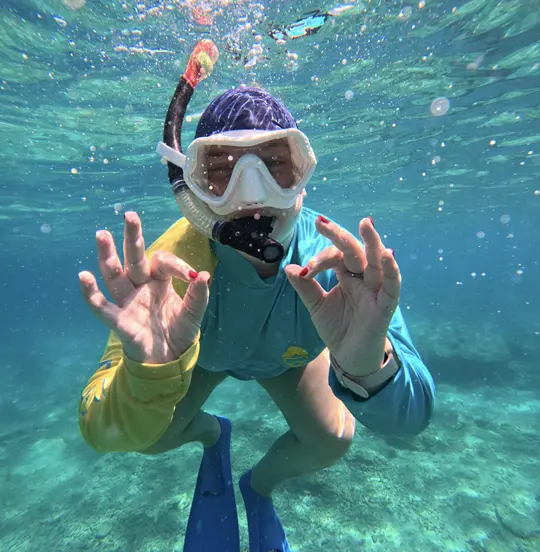
Perched just a few kilometres south of the historic city of Galle, Unawatuna is where most divers on the south coast begin their Sri Lankan underwater adventure. The bay itself is famously beautiful – a wide crescent of golden sand backed by palm trees, with the kind of postcard quality that makes it easy to forget you came here to dive. But it is what lies beneath the surface that keeps divers coming back.
Diving in Unawatuna is defined less by coral gardens and more by dramatic rock formations – boulders, canyons, swimthroughs, and overhangs that have been colonised over the years by sponges, black coral, and an array of marine creatures that have made these structures home. It’s a different kind of underwater landscape from what you might find on a typical tropical reef, and that’s part of its appeal. Sites like the SS Rangoon and SS Orestes shipwrecks give divers a mix of history, geology, and biology all in a single dive.
The best diving in Unawatuna happens between November and April, when the southwest monsoon has well and truly passed and the bay settles into calm, clear conditions. Visibility during these months can be exceptional – sometimes stretching between 10 to 15 metres – and the gentle currents make it suitable for divers of almost all experience levels.
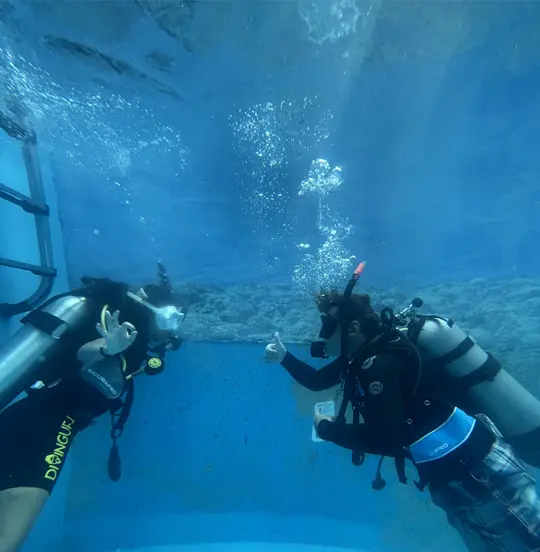
For those looking to learn, Unawatuna is an excellent place to get certified. PADI diving in Unawatuna is well established, with the area home to reputable centres that have been operating for decades. The most prominent of these is Divinguru Unawatuna (formerly the Original Unawatuna Diving Centre), a PADI 5-Star IDC Dive Resort that has been operating for years. It was the first PADI-accredited centre in the area and has won multiple PADI awards for outstanding contributions to diver education. Smaller boutique options also operate in the area, offering a more intimate, locally-run experience.
When it comes to Unawatuna diving prices, they are broadly in line with what you would expect from a mid-range Southeast Asian diving destination. Diving prices will vary depending on the operator and whether you opt for eLearning in advance. Equipment rental is typically included in course fees, and some centres offer free Enriched Air Nitrox as an added benefit – a genuine perk for those looking to extend their bottom time.
There are currently several PADI diving centres in Unawatuna to choose from, ranging from large, well-equipped facilities with full classroom setups and multiple compressors, to smaller operations with a more relaxed, community-feel atmosphere. If you’re planning to dive during the high season – roughly December through March – it is worth booking ahead, as courses and fun dive slots fill up quickly.
South Coast Diving in Sri Lanka: Beyond Unawatuna
Unawatuna sits at the heart of a broader south coast diving experience that stretches from Galle through to Weligama,Mirissa, and beyond. Each of these areas brings something distinct to the underwater table.
Weligama, about 30 kms east of Galle, has built a reputation as one of the more varied dive destinations on the coast. The reef here is deeper and more dramatic in places, with structures like Yala Rock reaching up to 15 metres in height and sheltering caves and overhangs packed with fish life. Lionfish lurk in the shadows of rock formations while turtle sightings are common enough that regular divers barely bother to log them anymore. The sandy bottom between reef structures is also worth exploring – crocodile fish and stingrays have a habit of blending into the seafloor so completely that you can almost miss them.
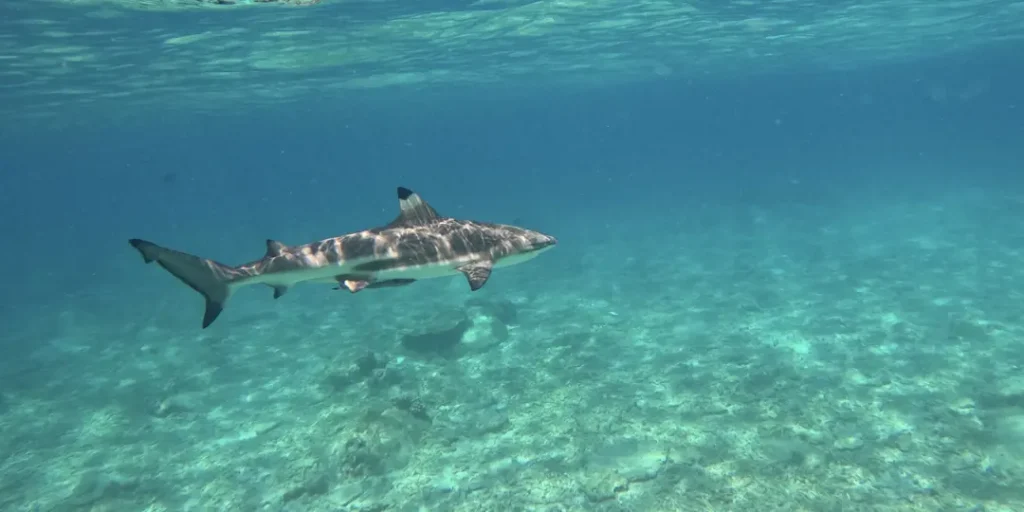
Mirissa is better known as Sri Lanka’s premier whale-watching port, but the diving here is genuinely worthwhile in its own right. The reefs offshore support a healthy population of reef fish, green turtles, and occasional reef sharks, and the gentle currents make for relaxed, comfortable diving. There is something surreal about gearing up for a reef dive in the morning and then watching a blue whale surface just a few hundred metres from the boat in the afternoon.
Trincomalee: The Crown Jewel of the East Coast
If the south coast is where most divers start, Trincomalee on the northeast coast is where serious divers end up. It offers a completely different underwater character – one shaped by dramatic topography, historically significant dive sites, and an extraordinary density of marine life.
The most famous site here is Swami Rock, an underwater cliff that drops away beneath what was once a Hindu temple. When the Portuguese destroyed the temple in the 17th century, its statues and stone masonry tumbled into the sea, and they remain there today – scattered among massive coral heads and patrolled by schools of fish and large rays. It’s an unusual dive, equal parts archeology and marine biology, and the fact that Arthur C. Clarke mentioned these waters in his 1957 book “The Reefs of Taprobane” speaks to how long divers have been captivated by Trincomalee. Further offshore lies Gorgonian Gardens, a site named for the magnificent sea fans that dominate the topography. Gorgonian sea fans can grow to impressive sizes, and the ones found here are no exception – they frame the dive in a way that makes even mediocre underwater photographers look talented. The site also attracts larger pelagic species, particularly when the currents pick up,
and experienced divers willing to time their visits with the tidal cycles can encounter enormous schools of trevally and snapper.
Nearby Nilaveli offers a gentler entry point to east coast diving, making it especially appealing to beginners and casual explorers. The reefs here are shallow, creating calm and accessible dive sites that are perfect for first-time divers and snorkelling enthusiasts alike. One of Nilaveli’s standout features is its exceptional underwater visibility, often ranging between 15 to 20 metres, allowing divers to fully appreciate the vibrant marine surroundings. The crystal-clear waters reveal some of the finest coral formations in Sri Lanka, teeming with colourful fish and diverse marine life. With its combination of safe conditions, stunning coral reefs, and excellent clarity, Nilaveli provides an ideal setting for both learning to dive and simply enjoying the beauty of the ocean at a relaxed pace. The best time to dive Trincomalee and the east coast is between March and October, when the northeast monsoon has passed and the bay is at its calmest.
Colombo & the West Coast Wrecks
Sri Lanka’s west coast, and particularly the waters around Colombo, holds one of the most impressive collections of wreck diving in the region. More than a dozen significant wrecks lie within recreational diving depth off the capital, ranging from colonial era merchant vessels to more recent cargo ships that have become artificial reefs over the decades.
The diversity of wrecks here is remarkable – some sit at 30 metres, others deeper – and their varying states of decay and colonisation mean no two dives are the same. One particularly intriguing site is the Lotus Barge, a small steam vessel that was only recently rediscovered by local diver Dharshana Jayawardena. Despite its modest size, the wreck has been rapidly colonised by marine life, and wreck fish and snappers have taken up permanent residence in its rusting hull.
Beyond the wrecks, the reef sites around Colombo – including Taprobane Reef and the Black Coral Reef – are worth exploring for divers who want variety. Beruwela, a short drive south of Colombo, offers a different profile again; deeper offshore sites with strong enough currents to attract massive shoals of fish, dramatic rock formations, and the kind of visibility that makes wide-angle photography genuinely rewarding. It’s better suited to experienced divers, but for those with the skillset, it delivers something memorable.
Kalpitiya: The Northwest Coast’s Best Kept Secret
On the northwest coast, Kalpitiya has been quietly gaining a reputation among divers who prefer to get off the beaten path. The Bar Reef, located just two kilometres offshore, is the largest coral reef in Sri Lanka and also the country’s largest protected marine area. With over 150 species of coral and more than 280 species of fish recorded here, the biodiversity is genuinely impressive, and the shallow sections of the reef make it accessible to snorkellers and novice divers as well as
experienced underwater explorers.
The Kalpitiya Ridge extends for about two kilometres at depths of up to 30 metres, offering structural complexity that includes caves, overhangs, and swimthroughs. Rock cod, humphead wrasse, and large grouper are commonly encountered here, and the general current conditions are mild enough to make it a comfortable dive even for those earlier in their training.
Kalpitiya’s dive season runs primarily from October to May, and access to some of the better sites does require a boat ride, but the relative lack of crowds compared to the south coast sites makes the extra effort worthwhile.
Practical Notes for Planning Your Sri Lanka Dive Trip
Sri Lanka’s geography and monsoon patterns mean that planning your dive trip around the right coast and the right season will make a significant difference to your experience. The south coast is best from November to April, while the east coast – including Trincomalee and Nilaveli – comes into its own between March and October. This seasonal split is actually one of Sri Lanka’s strengths, because it means the island is almost always accessible to divers somewhere.
Entry level certification costs are reasonable by international standards, and the quality of instruction at the established PADI centres is generally high. Equipment at the better centres is modern and well maintained, and English is widely spoken among dive staff across the country.
For anyone visiting Sri Lanka and considering whether diving is worth adding to their itinerary – even if you have never dived before – the answer is almost certainly yes. The underwater world here is diverse, accessible, and often surprising. Some of the best experiences you will have in Sri Lanka will happen below the waterline, in a world that most visitors never get to see.