SPECIALTY COURSES
The Myth about Nitrox (Enriched Air)
Author: Michael
19th December 2020
Read Time: 3 minutes
More time underwater?
Many times newly certified divers asked us if they can stay longer underwater with Nitrox. The answer is yes and no. It depends on the diver…
Most of the students or customers which only have their Open Water Diver license think if they will use Nitrox, the gas in their cylinders will last longer than with normal air, but that’s often their misunderstanding or better confusion of no decompression time (no stop time) and air consumption.
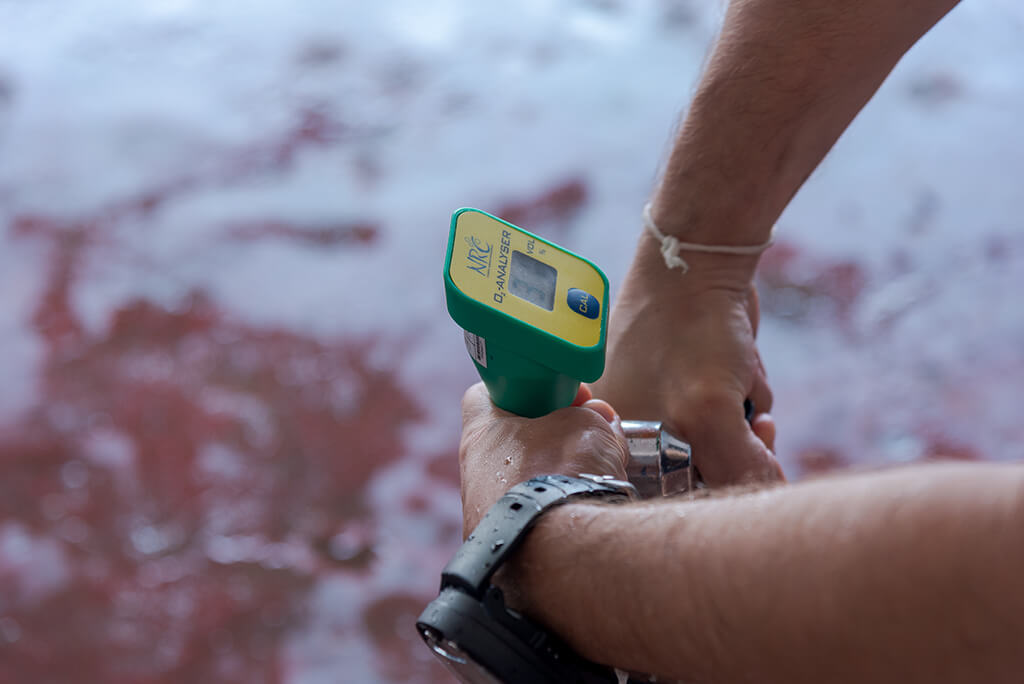
Analyzing an enriched air filled scuba cylinder.
Nitrox only affects your no stop time underwater depending on the percentage of the oxygen in your mix. Our no stop time is limited by decompression models calculating our nitrogen absorption. The more oxygen in the mix the less nitrogen we will absorb during a similar dive on air, so we could stay longer on Nitrox until we reach the no stop time. But there are also issues with more oxygen in your gas, that’s why it is so important to be properly trained before using Nitrox:
1. You need to know how to analyze the blend you are using.
2. Setting up your dive computer for the specific blend is crucial because the computer can only calculate what you tell him.
3. Breathing higher oxygen under pressure can be a risk, due to oxygen toxicity, you need to know the acceptable limits.
4. Using the right equipment: in some areas you need to have specific oxygen clean equipment to dive on Nitrox.
5. Pushing the no stop and depth limits on Nitrox include the same risk of decompression sickness and gas narcosis like with normal air.
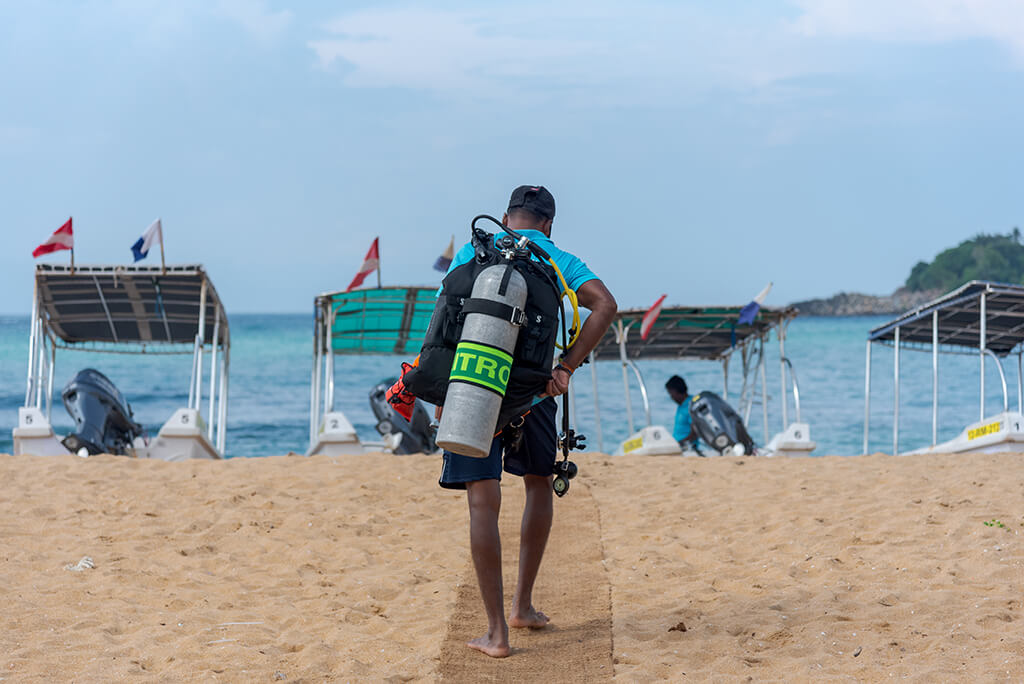
12 liter aluminum tank labeled with neoprene band.
The air/gas consumption on the other hand doesn’t have anything to do with the type of gas we’re using. If you’re struggling with your air supply on dives and you always short on air compared to other divers, here some tips to improve your air consumption:
1. Improve your buoyancy control and the amount of weight you are using.
2. Being streamlined: attach all your hoses and other equipment close to your body to have less drag.
3. Relax and stay calm underwater.
4. Efficient kicking style: most experienced divers use the frog kick to move underwater.
5. Use a bigger cylinder: Some dive centers offer 15 liter tanks for additional fees for customers with higher air consumption (so you’re not improving but it will give you more time underwater).
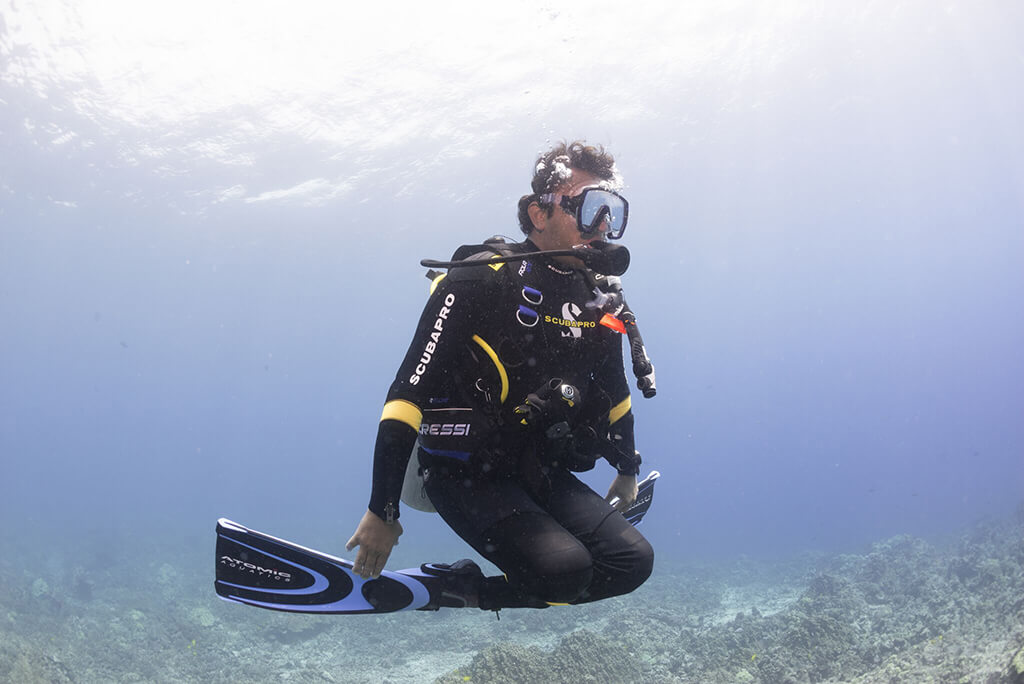
Hover motionless in Peak Performance Buoyancy.
Conclusion:
If you are already good in your air consumption and you can easily do a one hour multilevel dive getting close to the no stop times then you should definitely think about taking your Enriched Air Nitrox Course with us. But if you are more struggling surfacing with the recommended 50 bar left in your tank then you should think about taking your Peak Performance Buoyancy Course.
You May Also Like..



0 Comments