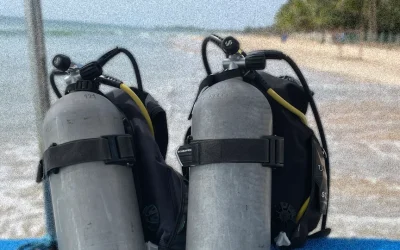



When you’re planning your first dive or looking to experience diving in Unawatuna or elsewhere in Sri Lanka, one of the fundamental concepts you will encounter is the safety stop. It might seem like a minor detail in the grand adventure of exploring underwater worlds, but this simple three-to-five-minute pause can make the difference between a perfect dive and a trip to the hospital. Understanding why we stop and what happens in our bodies during this pause is essential knowledge for every diver, regardless of experience level.
What Actually Happens During a Dive?
To understand safety stops, we need to talk about what is happening inside your body while you’re underwater. As you descend, the pressure around you increases. For every ten metres you go down, the pressure increases by one atmosphere. Your body responds to this pressure change in fascinating ways, particularly when it comes to the gases you’re breathing.
The air in your tank is roughly 79% nitrogen and 21% oxygen. While your body uses oxygen for metabolism, nitrogen is an inert gas that doesn’t get consumed. Under normal atmospheric pressure at the surface, nitrogen dissolves in your blood and tissues at a stable rate. But underwater, as pressure increases, more nitrogen dissolves into your bloodstream and tissues. The deeper you go and the longer you stay, the more nitrogen accumulates in your body. This process is perfectly natural and not inherently dangerous. The problem arises when you ascend too quickly. Think of a bottle of carbonated soda. When it is sealed, the carbon dioxide stays dissolved in the liquid because of the pressure inside the bottle. Open the cap suddenly, and the pressure drops rapidly – bubbles form everywhere as the gas comes out of solution. Your body works similarly with nitrogen. Ascend too fast, and nitrogen can form bubbles in your blood and tissues, leading to decompression sickness, commonly called “the bends”.
The Safety Stop Explained
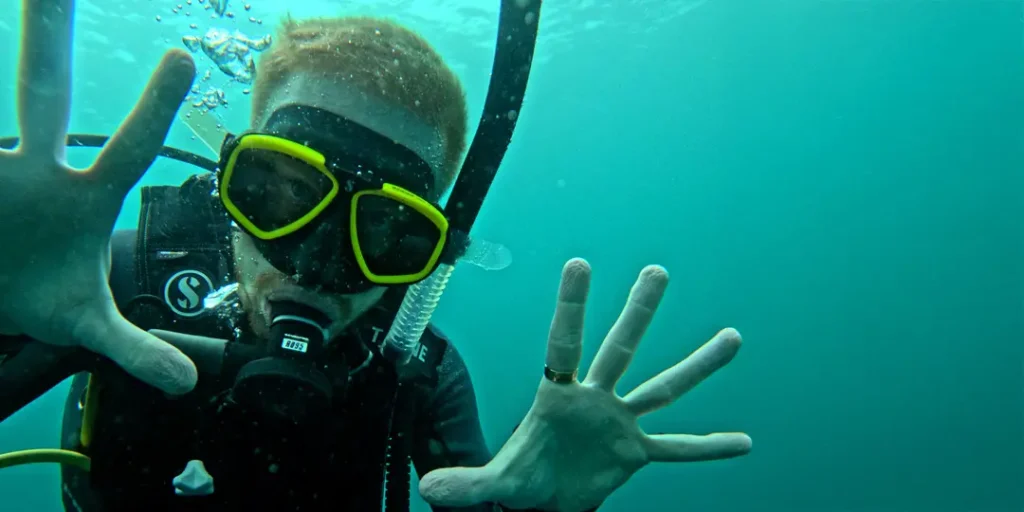
A safety stop is a precautionary pause during your accent, typically performed at 5 metres (or 15 feet) for three to five minutes. It’s not the same as a decompression stop which is mandatory for certain deep or long dives according to dive tables or computers. A safety stop is generally considered optional for recreational dives within no-decompression limits, but here’s the thing: experienced divers treat it as mandatory anyway.
During this stop, you’re giving your body extra time to off-gas the nitrogen that’s built up during your dive. By pausing in shallow water, you allow nitrogen to gradually leave your tissues and be exhaled through your lungs. The slower, more controlled release means bubbles are far less likely to form. When you’re learning at PADI diving centres in Unawatuna like Divinguru, or anywhere else in the world, instructors will emphasise this practice from your very first open water dive.
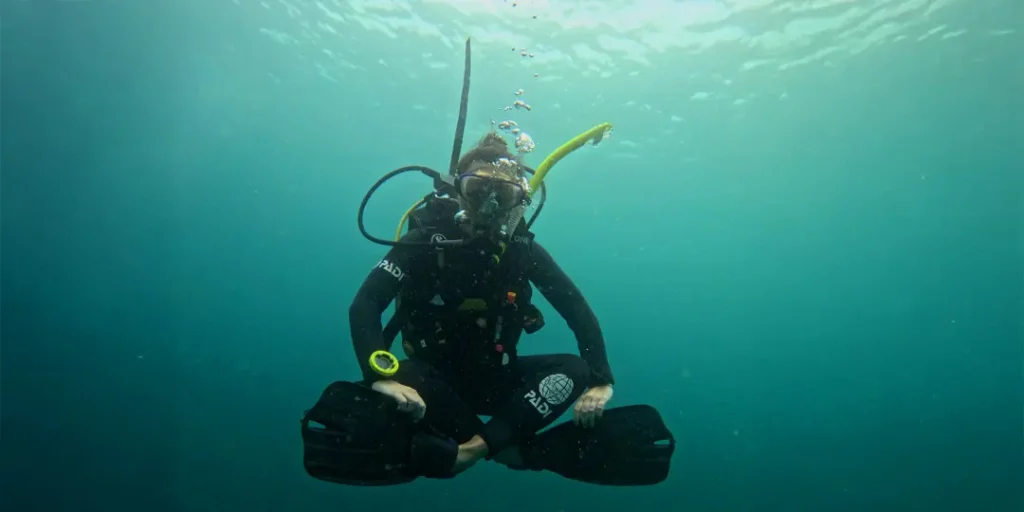
The five-metre depth is carefully chosen. It’s shallow enough that you have already released significant pressure, but deep enough that you’re not at immediate risk of surface-related issues. At this depth, you can comfortably hover, maintain neutral buoyancy, and perform the stop without fighting waves or swell that might affect you closer to the surface.
Why Every Dive Deserves a Safety Stop
Some divers wonder if a safety stop is really necessary for a shallow dive. You might think that a twelve-metre reef exploration for thirty minutes doesn’t carry much risk. While technically you would likely be fine without a safety stop on such a dive, building the habit matters enormously.
First, consistency in diving procedures keeps you safe. If you perform a safety stop on every single dive, it becomes automatic. You won’t have to think whether this particular dive warrants one – you will just do it. This muscle memory can be invaluable in situations where you’re tired, cold, or dealing with unexpected circumstances.
Second, even on shallow dives, a safety stop provides benefits. It gives you time to look up and check for boat traffic before surfacing. It lets you adjust your buoyancy carefully so you don’t pop-up like a cork. It offers a moment to ensure all your gear is secured and your dive buddy is ready to ascend with you. When you’re exploring the best diving in Unawatuna, these few extra minutes let you savour the experience, spot that last passing turtle, and transition mindfully from the underwater realm back to the surface world.
Third, conditions can change. You might plan a shallow dive, but perhaps you went a bit deeper than intended to peek into that interesting crevice. Maybe you got excited and didn’t notice your depth gauge creeping down. A safety stop provides a buffer for the imperfect reality of recreational diving, where plans don’t always match execution perfectly.
The Science Behind Nitrogen Absorption
Understanding the physiology makes the importance of safety stops clearer. Your body isn’t uniform in how it absorbs and releases nitrogen. Different tissues have different rates of absorption, based on their blood supply. Well-perfused tissues like your blood and brain absorb and release nitrogen quickly. Other tissues, like cartilage and bones, absorb and release nitrogen much more slowly.
Dive computers and tables account for these different tissue compartments using mathematical models. When you’re learning PADI diving in Unawatuna, you will discover how these models help predict safe dive profiles. But models are simplifications of incredibly complex biological systems. Factors like water temperature, exercise level, dehydration, age, body composition, and even recent alcohol consumption can affect how your body processes nitrogen.
A safety stop provides a margin of safety that accounts for these variables. It’s essentially insurance against the imperfect predictability of human physiology. No two divers are identical, and even the same diver might respond differently on different days. The safety stop helps protect everyone, regardless of these individual variations.
Proper Safety Stop Technique
Knowing you need to do a safety stop is one thing; performing it well is another. The key is maintaining neutral buoyancy at exactly five metres. This sounds simple but requires good buoyancy control, especially as your tank becomes lighter throughout the dive (you have used some air) and your wetsuit expands as you ascend into shallower water.
Many divers find it helpful to use a visual reference – a reef, an anchor line, or a descent line. If you’re doing south coast diving in Sri Lanka, you will often have beautiful reef formations at the perfect depth for a safety stop, turning this safety procedure into an opportunity for more observation. Watch your dive computer closely and make small adjustments with your breathing and your buoyancy compensator to stay within the five-to-six-metre range.
During the stop, breathe normally and calmly. This isn’t a time to hold your breath or breathe shallowly. You want continuous gas exchange in your lungs to maximise nitrogen elimination. Keep an eye on your buddy and your air supply. Most recreational dives end with plenty of air remaining, but it’s still good practice to monitor your gauge. If you’re running low on air, a safety stop becomes less important than reading the surface with adequate breathing gas.
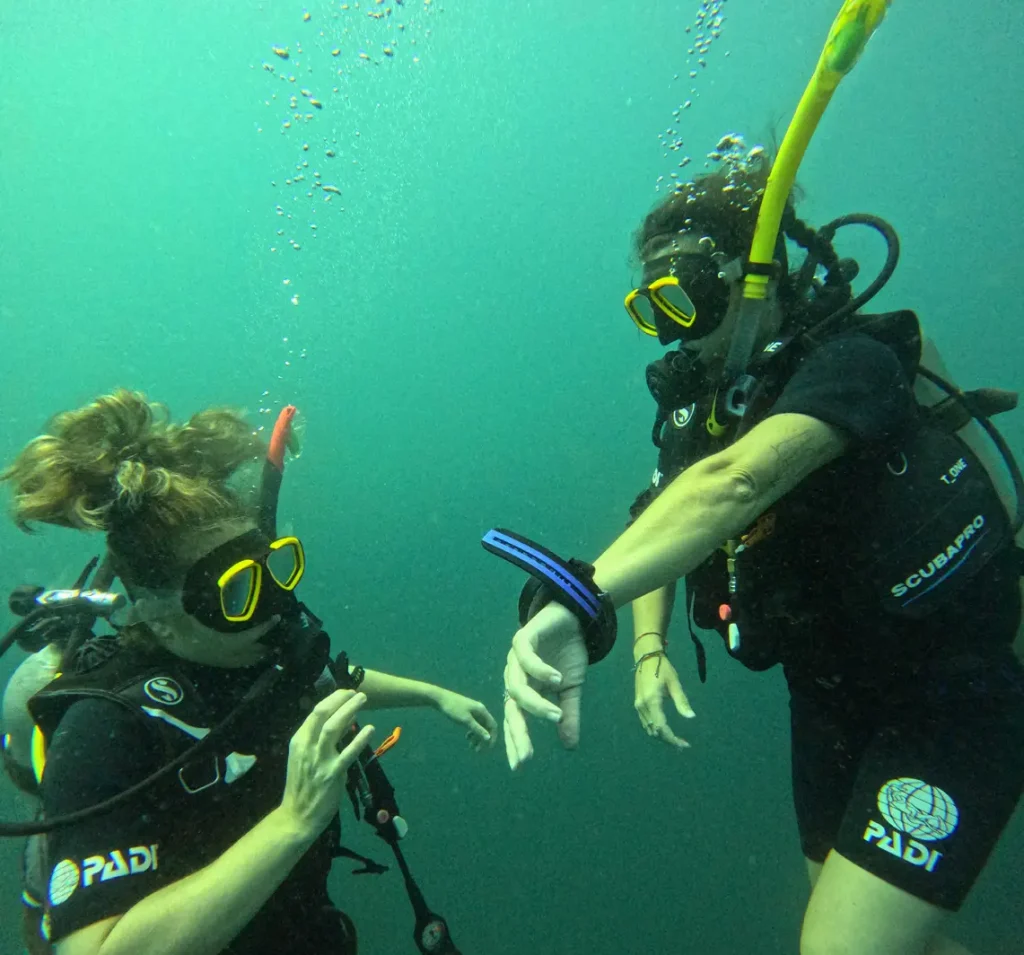
Use the time productively. Do a mental check: How do you feel? Any unusual symptoms? Are you warm enough? Is all your gear still properly secured? Look around and enjoy the underwater environment one last time. Check the surface for obstacles or boats. Signal your buddy when you’re ready to ascend those final few metres.
When Safety Stops Become Mandatory Decompression Stops
It’s worth clarifying that if you exceed no-decompression limits – either by going too deep or staying down too long – your safety stop becomes a mandatory decompression stop, and the rules change significantly. Your dive computer will alert you if this happens and will tell you exactly how long you need to stop at what depth. This is no longer optional, and skipping it would put you at serious risk of decompression sickness.
Recreational diving is specifically designed to stay within no-decompression limits, meaning you should never be in this situation if you’re following proper dive planning. When considering Unawatuna diving prices and booking with reputable operators like Divinguru, you’re paying for guides and instructors who ensure these limits are respected. Technical diving, which intentionally exceeds these limits, requires specialised training, equipment, and lengthy decompression schedules.
Real-World Benefits Beyond Physiology
Beyond the physiological advantages, safety stops offer practical benefits that improve your overall diving experience. They provide a buffer zone where you can make final checks before surfacing. You can verify that you and your buddy are together and ready to surface. You can look up and ensure there are no boats overhead a critical safety check, especially in popular dive sites.
The stop also helps with equalization in reverse. Some divers experience ear or sinus discomfort during ascent, and the gradual ascent with a stop gives more time for pressure equalization. You’re also less likely to experience that slightly dizzy or disoriented feeling that can come from ascending too quickly, even within safe limits.
Teaching & Reinforcing Good Habits
If you’re just starting your diving journey and researching Unawatuna diving options, you will find that quality instruction from dive centres like Divinguru emphasizes safety stops from day one. This early training establishes habits that last throughout your diving career. Instructors demonstrate proper technique, explain the reasoning, and ensure every training dive includes a proper safety stop.
As you gain experience and perhaps pursue advanced certifications, the importance of consistent safety procedures becomes even clearer. Experienced divers know that complacency is dangerous.The diver who gets bent is often someone who “knows better” but skipped procedures because they felt rushed, or decided that one dive didn’t need the full treatment. Excellence in diving comes from treating every dive with the same care and attention to safety protocols.

Teaching & Reinforcing Good Habits
A safety stop takes a few minutes, uses only a small amount of air, and requires nothing more than hovering peacefully in shallow water. Yet this simple act significantly reduces your risk of decompression sickness, provides time for important safety checks, and demonstrates the discipline that separates truly good divers from merely adequate ones.
Whether you’re exploring the incredible underwater landscapes through PADI diving in Unawatuna, or diving anywhere else in the world’s oceans, lakes, and quarries, those three to five minutes at five metres should be as fundamental to your dive as checking your air gauge or testing your regulator. They represent a commitment to safety, a respect for the physiological realities of being underwater, and an understanding that in diving, as in life, patience and caution serve us far better than haste.
The beauty of the underwater world is worth exploring, but only if we can do so safely and sustainably throughout our lives. Every safety stop you perform is an investment in your long-term diving health, ensuring that you can continue to experience the wonder of being weightless in blue space for decades to come. Make it a habit, make it automatic, and make it non-negotiable.